HOMEOWNER'S GUIDE TO SEWER LINE REPAIR & REPLACEMENT IN PENNSYLVANIA
What Every Homeowner Should Know Before a Sewer Problem Becomes an Expensive Emergency
Prepared By:
R.N. Fitch Excavation
Website:
https://rnfexcavation.com/
Introduction To Homeowner's Guide to Sewer Line Repair & Replacement
Most homeowners rarely think about their sewer line until something goes wrong. Unfortunately, when a sewer problem develops, it often becomes one of the most disruptive and expensive issues a homeowner can face.
A damaged sewer line can lead to sewage backups, foul odors, wet spots in the yard, foundation concerns, and even property damage. Many sewer problems begin gradually, showing warning signs months or even years before a complete failure occurs.
The purpose of this guide is to help Pennsylvania homeowners understand how residential sewer systems work, recognize the early signs of trouble, understand repair and replacement options, and make informed decisions when sewer issues arise.
Whether you are dealing with a current sewer problem, purchasing a home, preparing to sell a property, or simply want to protect your investment, this guide will help you understand what to expect and when professional excavation services may be necessary.
UNDERSTANDING YOUR HOME'S SEWER SYSTEM
Most homeowners know that wastewater leaves their home through drains, sinks, showers, and toilets. However, many are unaware of what happens after that water leaves the house.
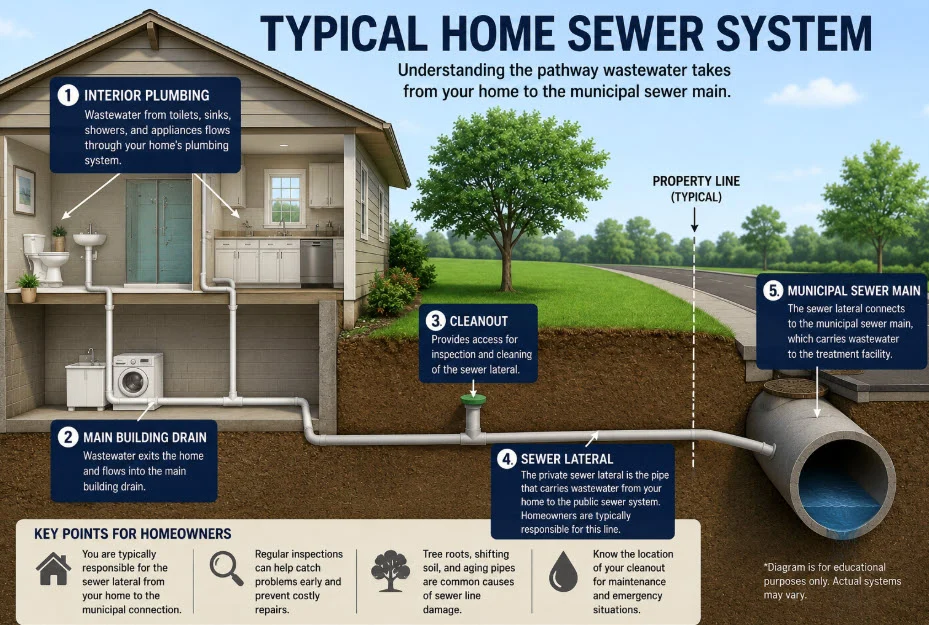
Your home’s plumbing system eventually connects to a pipe called a sewer lateral. The sewer lateral is the underground pipe that carries wastewater from your home to the municipal sewer system.
In most Pennsylvania communities, the homeowner is responsible for maintaining and repairing the sewer lateral from the home to the point where it connects to the public sewer system.
This means that if the sewer line becomes damaged, clogged, collapsed, or invaded by tree roots, the responsibility for repairs often belongs to the property owner.
A typical sewer system includes:
- Interior plumbing
- Main building drain
- Sewer lateral
- Cleanout access point
- Municipal sewer main
Understanding where these components are located can help homeowners identify problems before they become emergencies.
COMMON CAUSES OF SEWER LINE FAILURE
Sewer pipes are designed to last for many years, but no underground utility lasts forever.
Several factors contribute to sewer line failure.
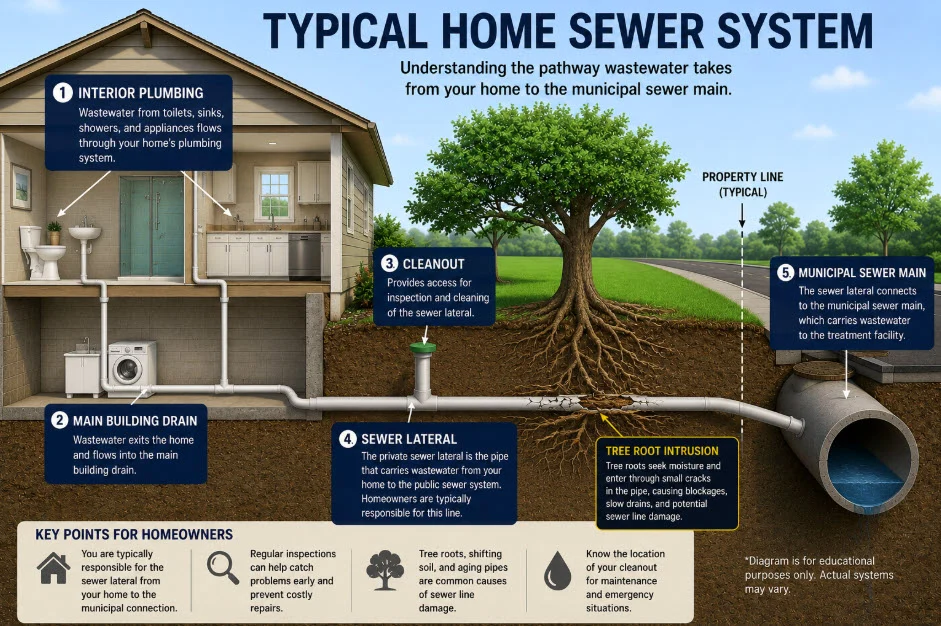
Tree Root Intrusion
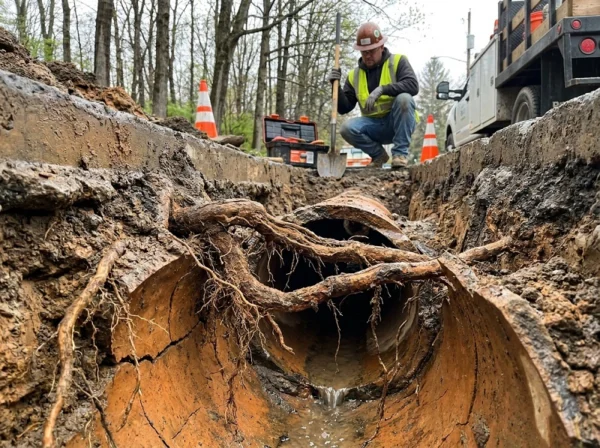
Tree roots naturally seek moisture. Even the smallest crack in a sewer pipe can attract roots. Once roots enter the pipe, they continue growing and eventually restrict wastewater flow.
Common symptoms include:
- Slow drains
- Recurring clogs
- Gurgling toilets
- Sewage backups
Aging Pipes
Many older Pennsylvania homes still have clay, cast iron, or other aging sewer materials.
Over time these materials can:
- Crack
- Corrode
- Shift
- Collapse
Older systems often become vulnerable to root intrusion and structural failure.
Ground Movement
Pennsylvania experiences seasonal freezing and thawing cycles that place stress on underground utilities.
Ground settlement, heavy rainfall, and soil movement can cause pipes to shift, separate, or collapse.
Pipe Collapse
In severe cases, a sewer pipe may completely collapse.
When this happens, wastewater flow can stop entirely and excavation is often necessary to restore service.
Grease and Debris Accumulation
Grease, wipes, paper products, and other materials can accumulate inside sewer lines over time.
Although some blockages can be cleared, repeated clogging may indicate a larger structural problem.
WARNING SIGNS OF A FAILING SEWER LINE
One of the biggest mistakes homeowners make is ignoring early warning signs.
Many sewer failures provide advance notice.
Watch for these common symptoms:
Multiple Slow Drains
If several drains throughout your home are draining slowly, the problem may be in the main sewer line rather than an individual fixture.
Recurring Backups
Repeated sewer backups often indicate a damaged sewer lateral.
Sewage Odors
Persistent sewer odors inside or outside the home may signal a break in the sewer system.
Wet Spots in the Yard
Unexpected wet areas can indicate a leaking underground pipe.
Unusually Green Grass
Wastewater leaking underground can fertilize grass and create patches of unusually lush growth.
Sinkholes or Depressions
As soil washes away around a damaged pipe, depressions may begin forming in the yard.
Gurgling Toilets
Air trapped within a damaged sewer system can create unusual sounds when toilets are flushed.
Basement Drain Issues
Water backing up through basement floor drains often indicates a sewer line problem.
If you experience multiple warning signs simultaneously, professional evaluation is recommended.
.
SEWER REPAIR VS. SEWER REPLACEMENT
One of the most common homeowner questions is whether a sewer line can be repaired or must be replaced.
The answer depends on the extent of the damage.
When Repair May Be Appropriate
Localized repairs may be possible when:
- Damage is limited
- A small section has failed
- Pipe structure remains intact
When Replacement Is Necessary
Replacement is often recommended when:
- The pipe has collapsed
- Damage is widespread
- Multiple failures exist
- Root intrusion is extensive
- Aging pipe materials have deteriorated
Although replacement requires a larger investment, it often provides the most reliable long-term solution.
WHAT IS A SEWER LATERAL?
A sewer lateral is the private underground pipe connecting your home to the public sewer system.
Many homeowners are surprised to learn that they are responsible for maintaining this pipe.
Common sewer lateral issues include:
- Root intrusion
- Pipe collapse
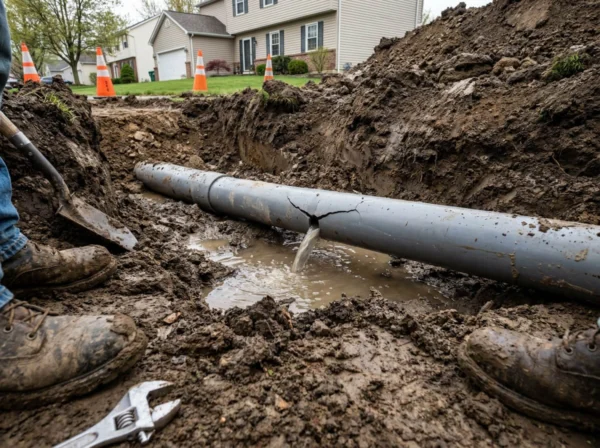
- Broken joints
- Corrosion
- Ground settlement
Because sewer laterals are buried underground, problems may go unnoticed until significant damage has occurred.
For homeowners buying or selling property, sewer laterals have become increasingly important due to municipal inspection requirements.
PROPERTY TRANSFER SEWER INSPECTIONS
Many municipalities now require sewer lateral inspections before property transfers.
The purpose is to identify defects that could affect the public sewer system.
Common issues discovered during inspections include:
- Root intrusion
- Cracked pipes
- Broken connections
- Inflow and infiltration problems
- Illegal connections
When deficiencies are identified, repairs may be required before the sale can be completed.
For both buyers and sellers, understanding local sewer requirements can prevent unexpected delays during real estate transactions.
WHAT TO DO DURING A SEWER EMERGENCY
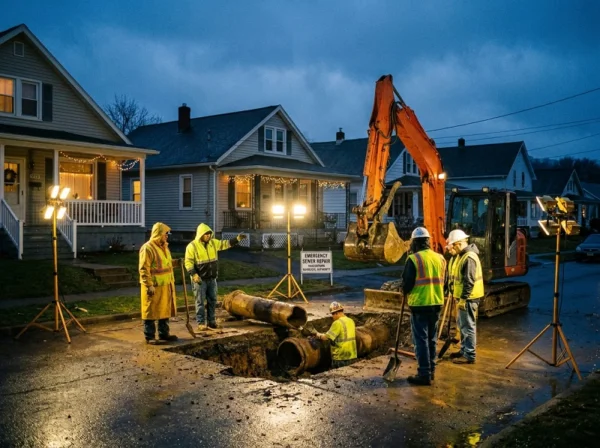
A sewer emergency can develop quickly.
If sewage begins backing up into your home:
Immediately Stop Using Water
Avoid:
- Flushing toilets
- Running dishwashers
- Doing laundry
- Using showers
Protect Occupants
Sewage may contain harmful bacteria and contaminants.
Avoid direct contact whenever possible.
Document Conditions
Take photographs if property damage is present.
Contact A Professional Excavation Contractor
Rapid response can often prevent additional damage and reduce repair costs.
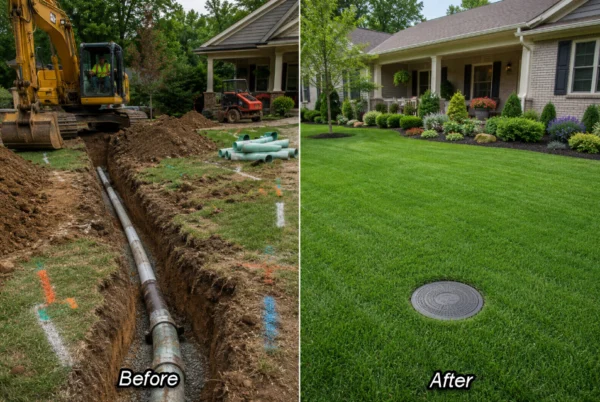
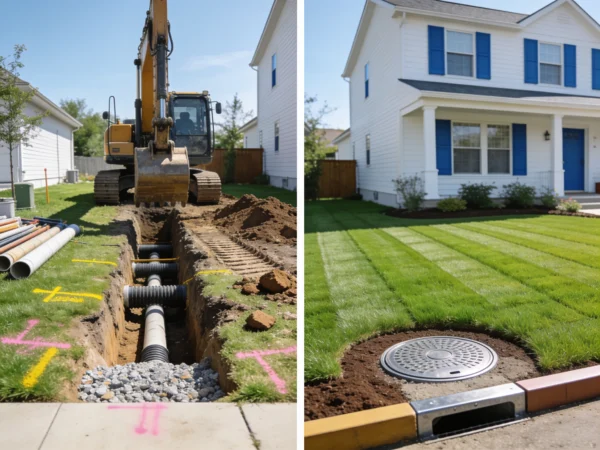
HOW THE SEWER REPAIR PROCESS WORKS
Every project is unique, but most repairs follow a similar process.
Initial Assessment
The problem is evaluated and the affected area is identified.
Utility Location
Underground utilities are marked for safety.
Excavation
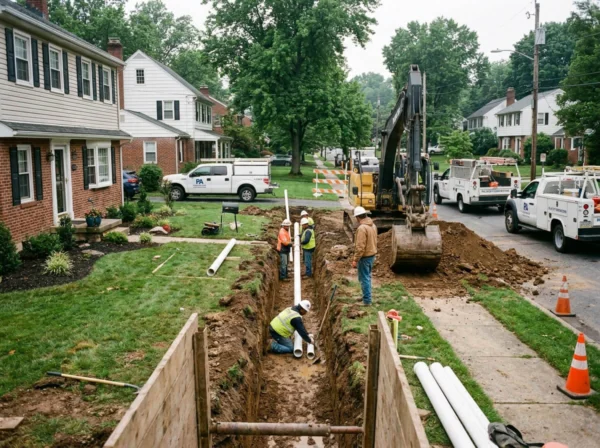
The damaged pipe is exposed.
Repair
Defective sections are repaired or replaced.
Testing
The system is checked for proper operation.
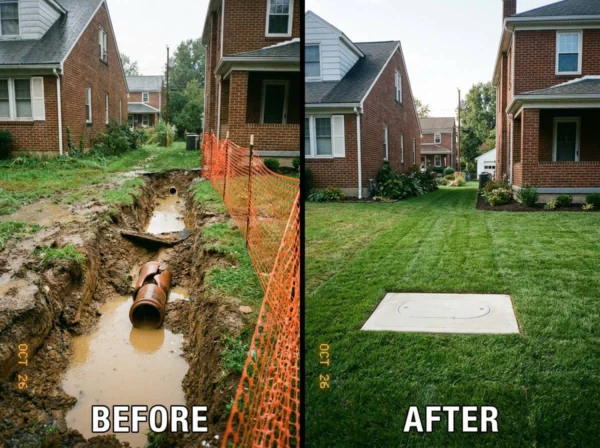
Restoration
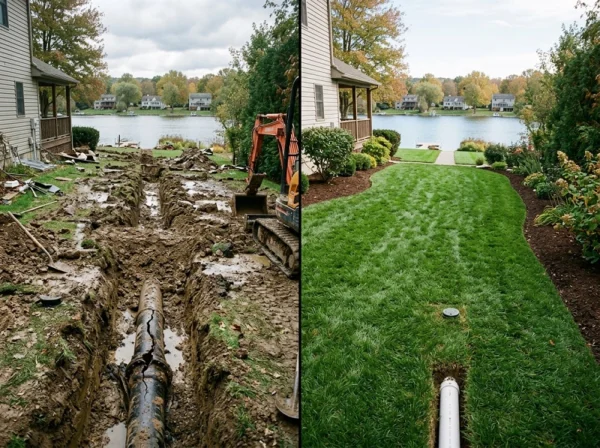
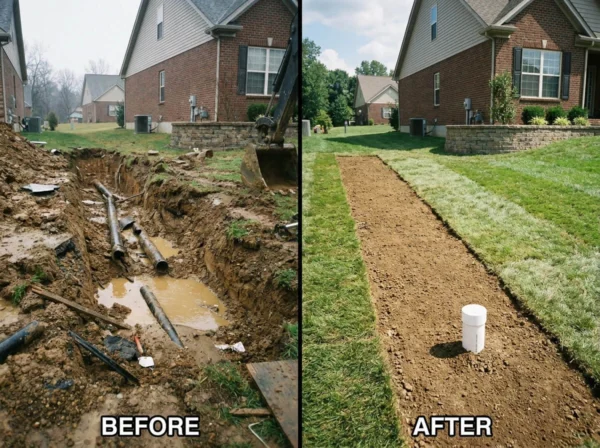
Excavated areas are restored as closely as possible to their original condition.
HOW TO PREVENT FUTURE SEWER PROBLEMS
Although not every sewer problem can be avoided, homeowners can reduce risk through proper maintenance.
Helpful practices include:
- Avoid flushing wipes
- Dispose of grease properly
- Monitor large trees near sewer lines
- Address drainage issues promptly
- Investigate recurring drain problems early
- Schedule professional evaluations when concerns arise
Preventive action is often significantly less expensive than emergency repairs.
FINAL THOUGHTS
most of it remains hidden underground, problems can develop unnoticed until major symptoms appear.
Recognizing early warning signs, understanding your responsibilities as a homeowner, and acting quickly when problems occur can help protect your property and avoid costly emergencies.
If you suspect a sewer line problem, recurring backups, drainage issues, or sewer lateral damage, professional excavation services may be necessary to restore proper operation and protect your investment.

CONTACT R.N. FITCH EXCAVATION
Professional Sewer Line Repair & Replacement Services
Services Include:
- Sewer Line Repair
- Sewer Line Replacement
- Sewer Laterals
- Trench Excavation
- Utility Excavation
- Drainage Excavation
- Emergency Sewer Repairs
Learn More:
https://rnfexcavation.com/
Call Today To Discuss Your Sewer Repair Project.
Add Your Heading Text Here
Lorem ipsum dolor sit amet, consectetur adipiscing elit. Ut elit tellus, luctus nec ullamcorper mattis, pulvinar dapibus leo.